
By muneershahid54@gmail.com / July 10, 2026
Introduction: A Responsive Website Is No Longer Optional
Importance of a Responsive Website in 2026: In today’s digital-first world, a business website serves as the foundation of an organization’s online presence. Customers expect websites to load quickly, display perfectly on every device, and provide a seamless browsing experience. Therefore, investing in a responsive website is no longer optional—it is a necessity for businesses that want to remain competitive and achieve sustainable growth. Furthermore, the rapid increase in mobile internet usage has transformed customer expectations. Whether users browse from smartphones, tablets, laptops, or desktop computers, they expect a consistent and user-friendly experience.
A mobile-friendly website not only satisfies these expectations but also strengthens SEO, improves user experience, and increases conversions. Consequently, businesses that prioritize responsive web design gain a significant competitive advantage.
1.What Is a Responsive Website?
A responsive website automatically adjusts its layout, images, and content to fit different screen sizes and devices. Instead of creating separate websites for desktop and mobile users, responsive web design uses flexible layouts and modern coding techniques to provide one consistent experience across all platforms.
Moreover, responsive websites eliminate usability issues that often frustrate visitors. Buttons remain easy to click, text stays readable, and images resize appropriately. As a result, customers can navigate the website comfortably regardless of the device they use, leading to greater satisfaction and stronger engagement.
2.Improve User Experience Across Every Device
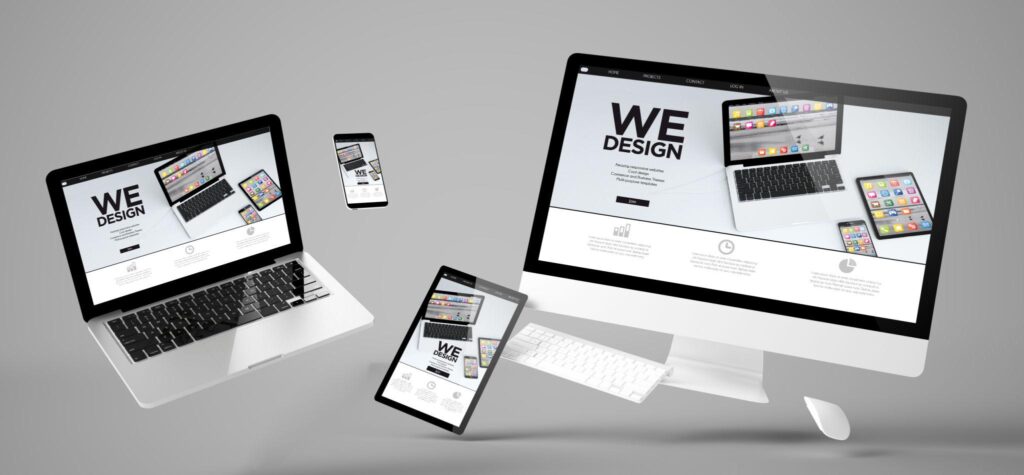
An outstanding user experience is one of the greatest benefits of web design. Visitors expect fast loading pages, simple navigation, and attractive layouts. Therefore, businesses that deliver these experiences are more likely to keep visitors engaged and encourage them to explore additional pages. Furthermore, satisfied visitors tend to spend more time on a website and interact with more content. They are also more likely to trust the business behind the website. Consequently, improved user experience directly contributes to higher customer retention, stronger brand credibility, and increased sales opportunities.
3.Responsive Web Design Improves SEO Performance
Search engines reward websites that provide excellent experiences for users. Consequently, SEO performance improves when businesses adopt responsive web design. Google prioritizes mobile-friendly websites because they deliver better usability and consistent content across all devices.
Additionally, responsive websites eliminate duplicate content issues that may arise from maintaining separate desktop and mobile versions. A single website structure makes it easier for search engines to crawl and index pages efficiently. Therefore, businesses improve their Google ranking, attract more organic traffic, and strengthen their overall digital presence.
4. Mobile Users Continue to Dominate Internet Traffic
The majority of internet users now browse websites through smartphones. Therefore, every business website must deliver an exceptional mobile experience to remain relevant. Customers frequently search for products, services, and local businesses while traveling, shopping, or relaxing at home.
Moreover, mobile users expect immediate access to information. Slow-loading pages or poorly designed interfaces often cause visitors to leave within seconds. Consequently, businesses that optimize for mobile devices capture more opportunities and reduce the risk of losing potential customers to competitors. This highlights the Importance of a Responsive Website in 2026, helping businesses improve search engine rankings, enhance customer satisfaction, and achieve long-term online success.
5.Faster Website Speed Increases Customer Satisfaction

Website speed plays a critical role in both user experience and business performance. Visitors appreciate websites that load quickly because they save time and provide immediate access to valuable information. Therefore, optimizing speed should be a priority for every business.Furthermore, faster websites experience lower bounce rates and higher engagement levels. Search engines also consider page speed as an important ranking factor. Consequently, improving website speed contributes to better SEO, stronger customer satisfaction, and increased conversion rates.
6.Build Trust and Strengthen Brand Credibility
A professionally designed responsive website reflects the quality and reliability of a business. Customers often judge a company within seconds of visiting its website. Therefore, an attractive, organized, and easy-to-use website creates a positive first impression.In addition, consistent branding across every device reinforces professionalism. Whether customers browse on mobile phones or desktop computers, they experience the same design, messaging, and functionality. As a result, businesses establish greater trust, improve customer confidence, and encourage repeat visits.
7.Increase Conversions and Generate More Leads
The primary objective of most business websites is to convert visitors into customers. A responsive website simplifies this process by providing clear navigation, accessible contact forms, and straightforward purchasing options. Consequently, visitors complete desired actions more easily.Moreover, businesses can optimize calls to action for every screen size without sacrificing usability. Whether customers request a quotation, subscribe to a newsletter, or complete an online purchase, responsive design removes unnecessary barriers. Therefore, companies generate more qualified leads and achieve higher conversion rates.
8.Support Your Digital Marketing Strategy

Every successful digital marketing campaign depends on a high-performing website. Whether businesses invest in SEO, social media marketing, email campaigns, or paid advertising, all traffic eventually reaches the company website. Furthermore, responsive websites improve campaign performance by providing consistent experiences for every visitor. Marketing investments produce better returns because users remain engaged instead of leaving due to poor usability. Consequently, businesses maximize their advertising budgets while improving customer acquisition.
9.Prepare Your Business for Future Growth
Technology continues to evolve rapidly, and customer expectations continue to increase. Therefore, businesses should invest in solutions that remain effective for years to come. Responsive web design provides the flexibility needed to adapt to new devices and changing digital trends.Additionally, maintaining one responsive website is more efficient than managing multiple versions for different devices. Businesses reduce maintenance costs, simplify updates, and improve operational efficiency. As a result, organizations remain competitive while focusing more resources on innovation and growth.
Conclusion: Invest in a Responsive Website for Long-Term Success

A responsive website is one of the most valuable investments any modern business can make. It improves user experience, strengthens SEO, increases website speed, supports digital marketing, and enhances Google ranking. Furthermore, responsive web design builds customer trust while creating more opportunities for lead generation and business growth. Ultimately, businesses that prioritize responsive design position themselves for long-term success in an increasingly competitive marketplace. By delivering fast, mobile-friendly, and user-focused experiences, organizations attract more visitors, convert more customers, and establish a strong online presence.
Frequently Asked Questions
1.What is a responsive website?
A responsive website automatically adapts its layout and content to provide an optimal viewing experience on smartphones, tablets, laptops, and desktop computers.
2.Why is a responsive website important for SEO?
Responsive websites improve mobile usability, reduce duplicate content issues, and provide a better user experience, all of which help improve search engine rankings.
3.How does responsive design improve user experience?
It ensures easy navigation, readable text, properly sized images, and faster loading pages across every device.
4.Does responsive web design increase conversions?
Yes. A responsive website simplifies navigation and purchasing processes, making it easier for visitors to become customers.
5.Is responsive web design suitable for small businesses?
Absolutely. Responsive design helps businesses of every size improve their online presence, attract more customers, and compete effectively in the digital marketplace.